
Picking the wrong factory costs you time, money, and your brand’s reputation. Most buyers only find out too late. Here is what to check before you commit.
A reliable bamboo cosmetic packaging factory should hold third-party certifications, use sustainably sourced materials, run verified production lines, and welcome factory audits. These eight checkpoints help you separate trustworthy suppliers from risky ones.
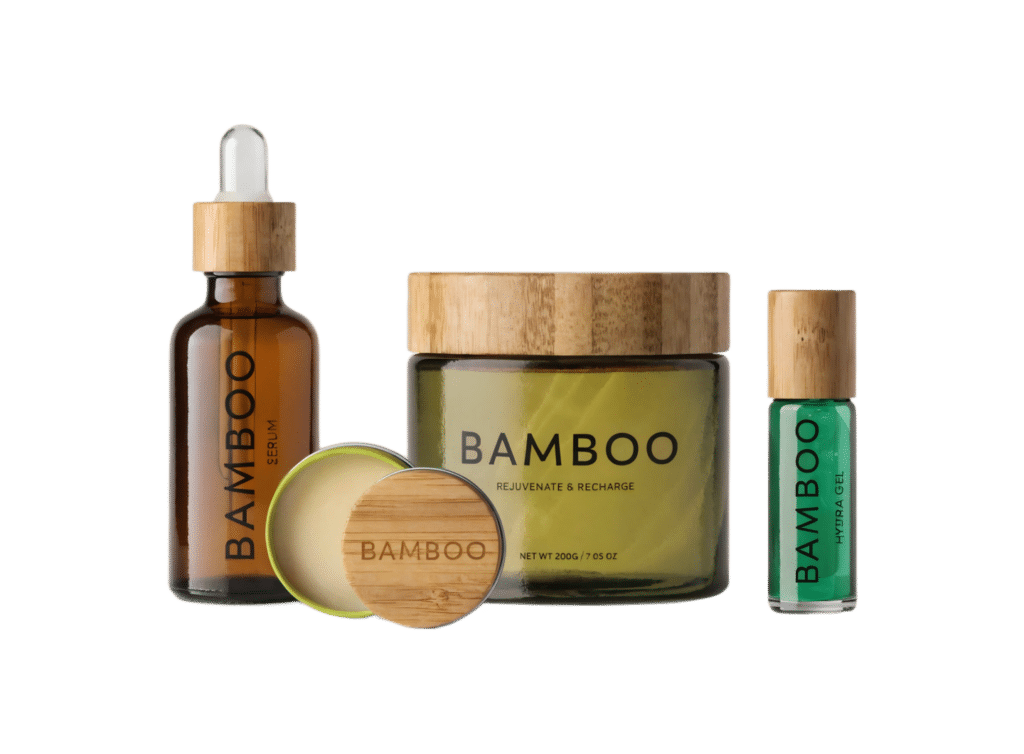
Sourcing bamboo packaging is not the same as sourcing standard plastic components. The material is natural, the process is more complex, and the quality gap between factories is wide. This checklist walks you through every point that matters, so you can make a confident decision.
1.Certifications and Compliance
A factory can claim anything on a sales call. What they cannot fake is a valid third-party certificate. This is the first filter you should apply.
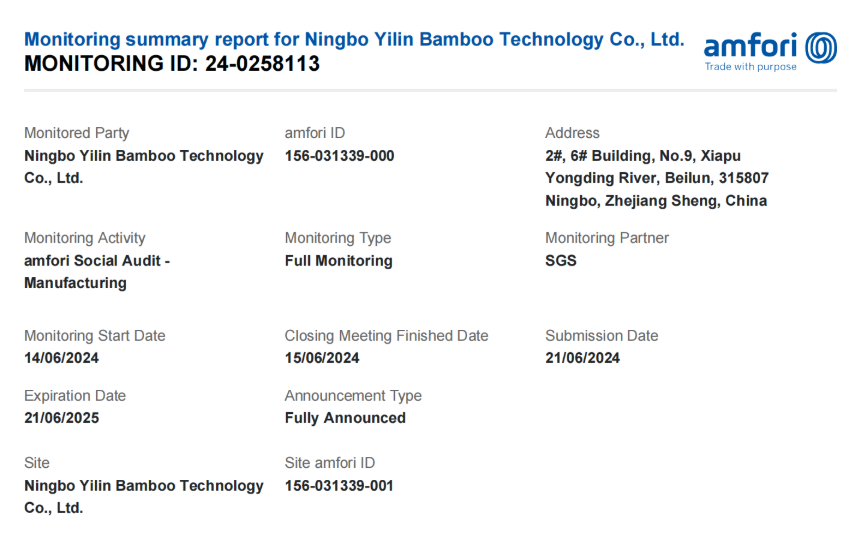
Key certifications for bamboo cosmetic packaging include ISO 14001 for environmental management, BSCI for social compliance auditing, and FSC for responsible forest sourcing. Product-level reports such as Food Grade and REACH testing add further proof for specific shipments.
Why Third-Party Certification Matters
A certificate issued by an independent body means someone outside the factory has reviewed the processes, the site, or the material. That is a very different thing from a self-declared quality statement on a company brochure.
Ask our team for current quality, environmental and social compliance documentation relevant to your order. We can also provide Food Grade and REACH test reports before shipment on relevant products. But I want to be direct with you: no single report proves universal compliance across every product a factory makes. Each report covers what was tested, at the time it was tested.
What Each Certification Actually Covers
| Certification | What It Covers | Who Issues It |
|---|---|---|
| ISO 14001 | Environmental management system | Third-party auditor |
| BSCI | Social compliance and labour conditions | Amfori BSCI network |
| FSC | Responsible wood and bamboo sourcing | Forest Stewardship Council |
| Food Grade Report | Material safety for a specific product | Accredited testing lab |
| REACH Report | Chemical substance compliance for EU market | Accredited testing lab |
What to Ask a Factory
Ask for the actual certificate, not a logo on a website. Check the expiry date. Check the scope — does it cover the specific product category you are buying? A factory with more verified third-party documents gives you a more objective picture of its real capability.
2.Bamboo Sourcing: Where the Raw Material Comes From
Raw material quality sets the ceiling for finished product quality. If the bamboo is poor, no amount of finishing can fix it.
FSC-certified bamboo sourcing means the material comes from forests managed to responsible standards. Ask your supplier where the bamboo originates, whether it carries FSC traceability, and how they select and inspect incoming raw material.
The Problem With Unverified Bamboo Supply
Bamboo is a fast-growing grass, which makes it appealing as a sustainable material. But “natural” does not automatically mean “responsibly sourced” or “consistent in quality.” Moisture content, age at harvest, and regional variation all affect how the final product performs — its weight, its surface finish, and its durability over time.
What Good Sourcing Looks Like
| Sourcing Factor | What to Look For | Why It Matters |
|---|---|---|
| Origin traceability | FSC chain of custody | Confirms responsible forestry |
| Incoming inspection | Documented material checks | Catches defects before production |
| Material consistency | Fixed supplier relationships | Reduces batch-to-batch variation |
| Harvest maturity standards | Age and density criteria | Affects structural strength of packaging |
A factory that cannot tell you where its bamboo comes from, or that buys from the cheapest available spot market, carries more supply risk. FSC certification gives you documented traceability. That matters especially if your brand makes sustainability claims to end consumers.
3.Production Capacity and Equipment
Capacity on paper means nothing without the machines and workforce to back it up. Ask for specifics, not round numbers.
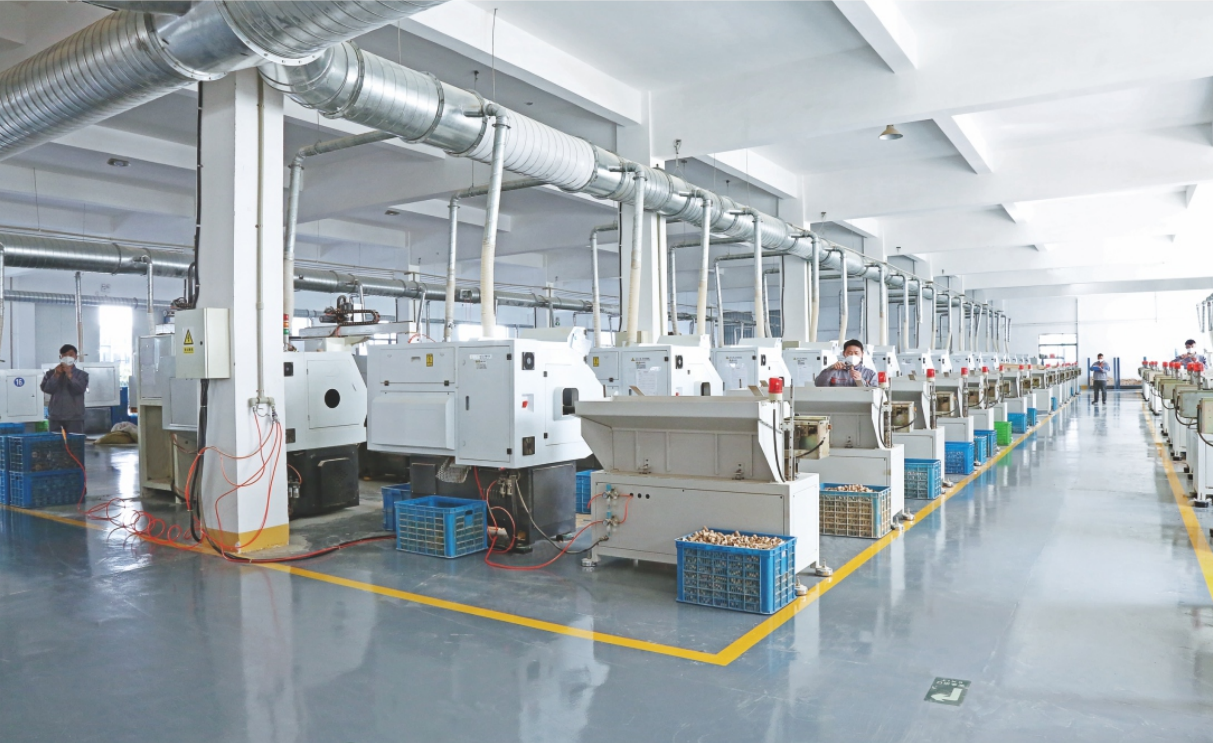
A factory’s real production capacity is shown by its number of processing machines, dedicated assembly lines, workshop headcount, and monthly output value. These are concrete figures you can request, compare, and verify during an audit.
Why Equipment Detail Matters
The type and number of machines tells you what a factory can actually produce, and at what precision level. A factory with only basic woodworking equipment cannot hold the tight tolerances that cosmetic packaging requires. Laser engraving, CNC machining, and dedicated quality lines are signs of a more capable operation.
At Yilin Bamboo, our facility runs 150 wood and bamboo processing machines, 1 laser engraving machine, and 4 dedicated assembly and quality inspection lines. The workshop maintains a headcount of 50 to 100 workers, and our average monthly production value is RMB 2 million. The factory was established in 2004, giving us 22 years of production, sales, and export experience.
Capacity Benchmarks to Compare
| Indicator | What It Tells You |
|---|---|
| Number of processing machines | Range of operations and throughput speed |
| Laser / CNC equipment | Precision and decorative capability |
| Assembly lines | Ability to handle multi-component packaging |
| Quality inspection lines | Commitment to in-process checking |
| Workshop headcount | Scalability and operational stability |
| Monthly production value (RMB) | Overall factory scale at a given period |
| Years in operation | Accumulated process knowledge and reliability |
Do not accept vague answers like “large-scale facility.” Ask for numbers. A factory confident in its capability will give them to you directly.
4.Quality Control: From Raw Bamboo to Finished Packaging
Many quality problems in bamboo packaging are invisible until the product is in your customer’s hands. A strong QC system catches them before that point.
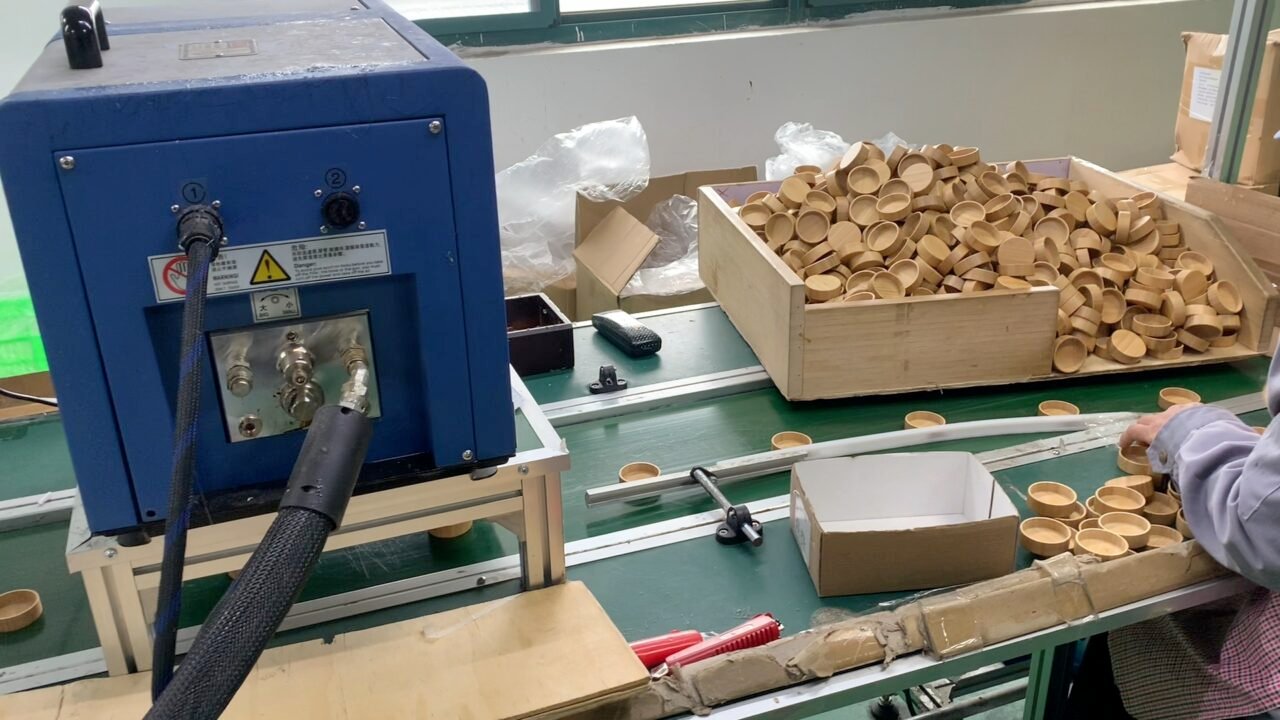
Effective quality control in bamboo packaging covers incoming raw material inspection, in-process checks at each production stage, and final inspection before shipment. Ask whether the factory runs 100% visual checks and what sampling standards apply to functional testing.
Where Quality Breaks Down
Bamboo packaging combines natural material processing with precision assembly. Problems can appear at multiple points: uneven bamboo density causing surface defects, poor sealing on bamboo jars, inconsistent dimensional tolerance across batches, or surface coating failure under normal use conditions.
A Good QC System Covers These Stages
| QC Stage | What Gets Checked | Why It Matters |
|---|---|---|
| Incoming materials | Bamboo moisture, density, surface | Prevents defects entering production |
| In-process (machining) | Dimensional tolerance, surface finish | Catches errors before assembly |
| In-process (assembly) | Fit, function, closure mechanism | Ensures components work together |
| Surface treatment | Coating adhesion, colour consistency | Affects appearance and durability |
| Final inspection | 100% visual + sampled functional | Last gate before shipment |
| Pre-shipment testing | Sealing, drop, durability | Confirms performance in use |
What to Ask the Factory
Ask specifically: do you run 100% visual inspection on outgoing goods? What sampling standard do you follow for functional tests? Can you share a recent inspection report? A factory with a documented QC process will answer these questions without hesitation.
5.R&D and Customization Capability
Off-the-shelf bamboo packaging is easy to find. Packaging that fits your brand’s exact brief is a different matter. This is where R&D depth separates ordinary factories from genuine partners.
A factory with real R&D capability can take your brief — material, form, finish, function — and develop it into a production-ready component. Look for in-house design support, prototyping capability, and experience working with mixed materials such as bamboo combined with glass or bio-plastics.

Why Generic Catalogues Are Not Enough
Cosmetic brands compete on packaging differentiation. A factory that only offers its existing catalogue gives you the same options your competitors already have. True customization requires the factory to understand materials, production constraints, and finish options well enough to advise you, not just execute a drawing.
Dimensions of Customization Capability
| Capability Area | Examples | What It Enables |
|---|---|---|
| Material combination | Bamboo with glass, PLA, or recycled plastics | Unique product aesthetics and function |
| Surface treatment | Eco-coating, carving, laser engraving | Brand identity on the physical product |
| Form development | Custom jar shapes, closures, dispensers | True product differentiation |
| Prototyping speed | Sample turnaround time | Faster brief-to-market timeline |
| Engineering support | DFM feedback on your designs | Reduces costly redesign cycles |
The Right Questions to Ask
Ask the factory: can you show me examples of briefs you developed from scratch? What materials can you combine with bamboo? What is your typical sample lead time? A factory with genuine R&D capability will walk you through real examples rather than pointing only to a product brochure.
6.Export Experience and Client References
A factory that has shipped to your target market before already knows the compliance requirements, the logistics risks, and the documentation your buyers need. That experience has real value.
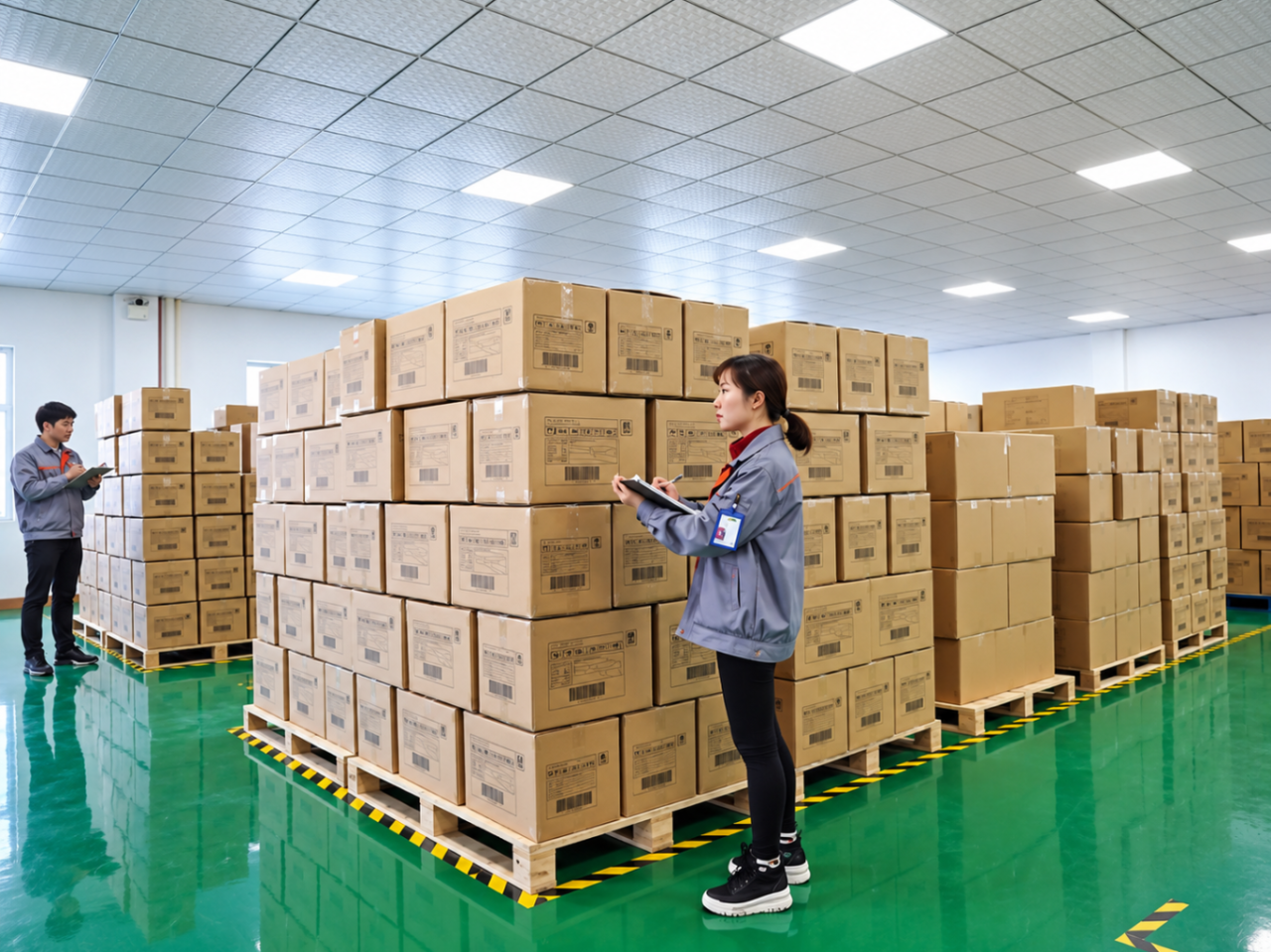
Export experience means the factory understands import regulations, shipping documentation, and market-specific compliance in your destination country. Ask how long they have been exporting, which markets they serve, and whether they can provide references or past project examples.
Why Export Track Record Matters
A factory that only sells domestically may have excellent products but limited awareness of EU REACH requirements, US CPSC expectations, or the documentation your customs broker will ask for. Export experience means these issues have already been encountered and solved.
Yilin Bamboo has been in operation since 2004 — 22 years of production, sales, and export experience. That timeline reflects accumulated knowledge about what global buyers actually need.
How to Evaluate Export Capability
| Indicator | What to Ask | What a Good Answer Looks Like |
|---|---|---|
| Years exporting | Since when? | A specific year with verifiable history |
| Key export markets | Which countries? | Matches your target market |
| Compliance familiarity | Do you know REACH / CPSC? | Concrete yes with documentation examples |
| Client references | Can you share past clients or cases? | Willing to share, with permission |
| Shipment documentation | Can you provide test reports pre-shipment? | Yes, with examples |
References are worth asking for. A factory confident in its client relationships will be comfortable connecting you with past buyers, or at minimum sharing anonymised case examples that show the type of work they have done.
7.Red Flags: 5 Warning Signs of an Unreliable Factory
Not every problem is obvious during a sales conversation. Some warning signs only become visible when you know what to look for.
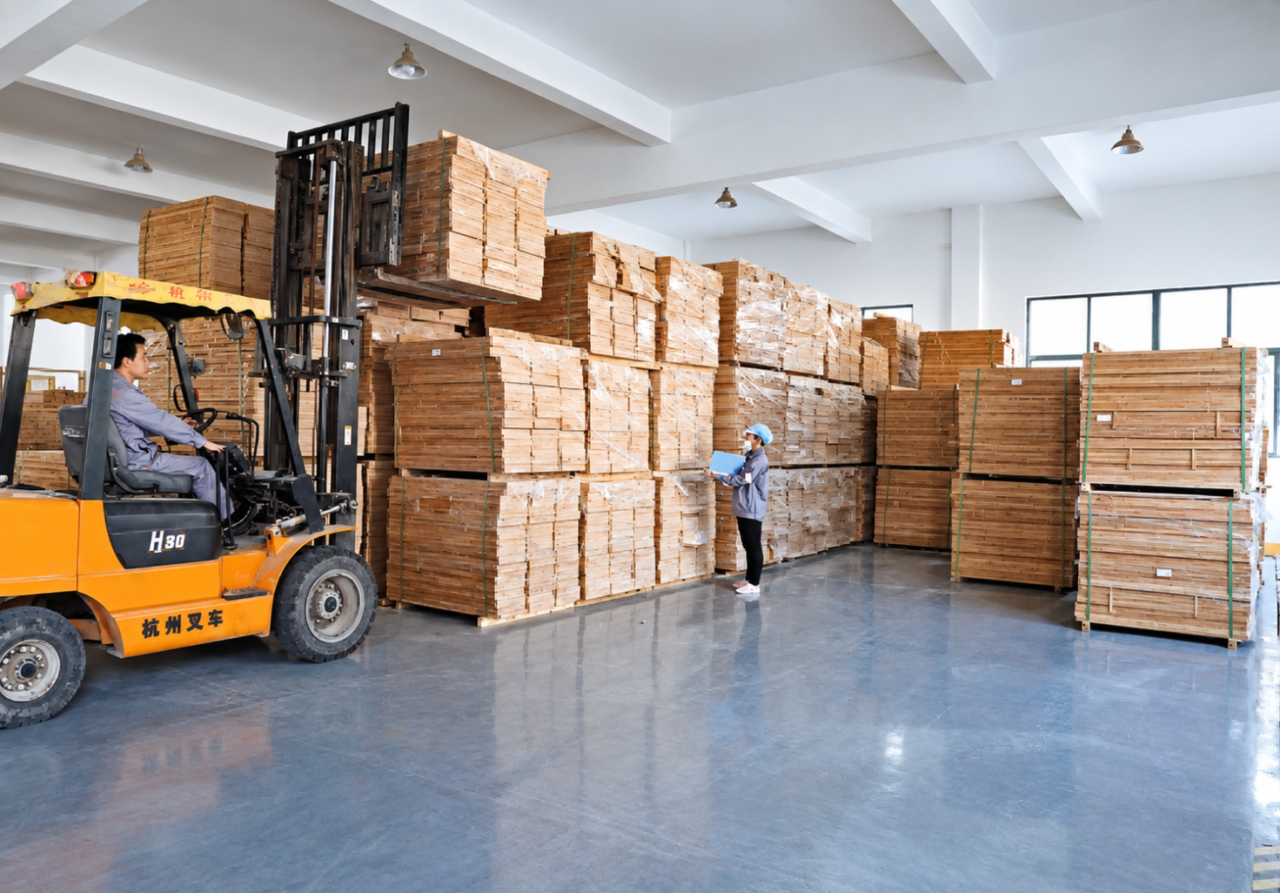
Five warning signs of an unreliable bamboo packaging factory: no verifiable third-party certifications, vague answers about production capacity, unwillingness to allow factory audits, no product-specific test reports, and no traceable bamboo sourcing documentation.
Breaking Down Each Warning Sign
These five signals are not just inconveniences. Each one points to a specific category of risk.
The 5 Red Flags in Detail
| Red Flag | What It Signals | The Real Risk |
|---|---|---|
| No verifiable certifications | Claims without documentation | You have no third-party check on their processes |
| Vague capacity figures | “We are large scale” with no numbers | They may not be able to deliver your volume |
| Refusal to allow audits | Hiding something about the facility or workforce | Labour, environmental, or quality issues on site |
| No product-level test reports | Cannot confirm material safety | Non-compliance in your target market |
| No bamboo sourcing traceability | Cannot confirm FSC or responsible origin | Sustainability claims to your consumers are unverifiable |
What to Do When You See a Red Flag
One red flag may have a reasonable explanation. Two or more together is a pattern. If a factory cannot answer basic questions about certifications, capacity, or sourcing — and is not willing to schedule a video or on-site audit — move to the next candidate. The time you spend verifying now is a fraction of the cost of a quality failure after your order ships.
8.How to Verify a Factory Before Placing an Order
Verification is not just about asking the right questions. It is about seeing evidence. The most reliable suppliers make this process straightforward.
To verify a bamboo packaging factory before ordering, request copies of all current certifications, ask for product-specific test reports relevant to your market, and schedule either a video audit or an in-person factory visit to confirm what you have been told.

The Verification Process Step by Step
Verification works best as a structured process rather than a set of informal questions. Move through it in sequence so that each step confirms or challenges what the previous step showed.
Verification Checklist
| Step | Action | What You Are Confirming |
|---|---|---|
| 1 | Request all current certificates with expiry dates | Certifications are valid and in scope |
| 2 | Ask for product test reports (Food Grade, REACH) | Material safety for your target market |
| 3 | Request FSC sourcing documentation | Bamboo traceability and responsible origin |
| 4 | Ask for production capacity figures (machines, lines, headcount, monthly output value in RMB) | Real capability matches claimed capacity |
| 5 | Schedule a video factory audit | Visual confirmation of facility, equipment, and workforce |
| 6 | Schedule an on-site audit if order size warrants it | Deepest level of verification before commitment |
| 7 | Ask for references or past project examples | Track record with similar buyers and markets |
Why Accepting Audits Is a Signal in Itself
A factory that welcomes video and on-site audits is sending a clear message: they have nothing to hide. At Yilin Bamboo, we accept both video audits and in-person factory visits. That openness is part of how we build confidence with buyers before an order is placed.
The verification process takes time. But for a buying programme at scale, that time is well spent. It is far less expensive than managing a non-conformance after delivery, or rebuilding supplier relationships following a quality failure.
Conclusion
Eight checkpoints, one goal: find a factory you can trust. Use this list before you commit, and the right supplier becomes much easier to identify.
[^1]: “What Is FSC Certified Packaging and Its Benefits”, https://www.respectmanufacturing.com/feeds/blog/fsc-packaging. FSC certification ensures that bamboo is sourced from responsibly managed forests, which is crucial for sustainability claims in cosmetic packaging. Evidence role: definition; source type: government. Supports: A reliable bamboo cosmetic packaging factory should hold third-party certifications, use sustainably sourced materials, run verified production lines, and welcome factory audits.. Scope note: The support is specific to the definition and importance of FSC certification in sourcing bamboo.

